
By Apolline Reymond and Neil Shah · August 25, 2026
Lire la version française sur SoundsPro →

The catalog acquisition market has just closed an era of easy money and brutal learning: a valuation is only as solid as the rights data underneath it.
In March 2024, the independent audit of Hipgnosis Songs Fund by Shot Tower Capital delivered a masterclass in due diligence failure. The report chopped $700 million—a 26% markdown—off the fund’s asset value. The core issue wasn't just overly optimistic streaming projections; it was a systemic failure of rights diligence. Disclosures had overstated the actual scope of ownership, published shares were mismapped, and royalty collection safeguards were missing. On 67 out of 105 catalog deals, Hipgnosis had overpaid for rights they didn't fully own or couldn't efficiently administer.
Historically, catalog M&A has suffered from a rigid workflow: deals start with relationships and top-line streaming multiples, while expensive technical due diligence is pushed to the very end—often applied via sampling rather than systemic mapping. Buyers either overpay based on surface-level valuations or burn massive budgets running deep diligence on the wrong assets.
We believe modern catalog acquisition should follow a different sequence: Search & Screening first. Then Rights Intelligence. Then the Deal.
A scalable, broad-funnel screening layer—starting at $25 for smaller catalogs and extending to enterprise portfolios—that synthesizes thousands of signals across proprietary acoustic analysis, market performance, and historical valuation data. It benchmarks catalog characteristics against transaction data and long-tail performance patterns to evaluate commercial durability and value concentration before deep diligence begins.
A deep, forensic technical audit—scalable from single-writer catalogs to major publisher acquisitions—that maps registration integrity, ISRC/ISWC alignment, mechanical completeness, and derivative footprints across global rights databases. It identifies potential uncollected royalties, registration gaps, and administrative liabilities that can affect catalog pricing, risk, and post-acquisition administration.
The traditional acquisition process assumes that every catalog entering diligence deserves the same level of attention. In practice, that’s rarely true.
Institutional buyers, publishers, and investment firms review far more opportunities than they ultimately pursue. Time, diligence budgets, and analyst capacity are finite, making prioritization one of the most important—and least discussed—parts of catalog acquisition.
Historically, that prioritization has relied on relationships, reputation, streaming multiples, or intuition. While useful, these signals provide only a partial picture of a catalog’s commercial potential.
MusicAtlas approaches the problem differently.
Rather than relying solely on past royalty statements—which show where a catalog has been, not where it’s going—MusicAtlas begins with a combined approach: Acoustic Analysis + Multi-Signal Market Intelligence.
Acoustic Feature Extraction: Deep analysis of arrangement density, tempo profiles, harmonic structures, and genre dynamics to characterize the catalog’s structural and sonic profile.
Historical Valuation Matching: Benchmarking catalog characteristics against historical transaction data, valuation ranges, and long-tail performance patterns.
360° Consumption Signals: Aggregation of signals across streaming persistence, radio airplay, UGC/short-form video usage, search velocity, and sync placement activity.
MusicAtlas Value Score (MAVS): Scenario-based valuation modeling across standard and premium asset profiles, paired with value concentration metrics.
The objective is not to replace due diligence. It is to make due diligence more targeted.
With screening designed to scale from smaller catalogs to institutional portfolios, MusicAtlas can reduce initial screening costs to a small fraction of a traditional technical audit. This allows buyers to evaluate hundreds of potential targets across a deal pipeline before committing significant legal, accounting, or technical diligence resources.
“Should we spend $6,000 auditing this catalog?”
“Is this a catalog worth understanding more deeply?”
That simple shift fundamentally changes the economics of catalog sourcing.
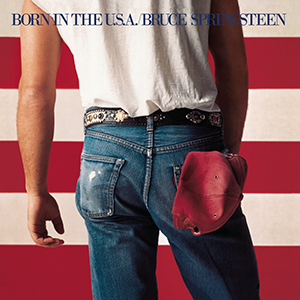
When Sony Music acquired Bruce Springsteen’s entire masters and publishing catalog in 2021 for an estimated $500 million, it acquired two distinct asset classes with radically different administration layers: master rights, which are comparatively direct and centralized, and publishing and mechanical rights, which are distributed, complex, and prone to leakage.
When we examine the catalog through the broad lens of screening and the focused lens of diligence, we can see both the importance and complementary nature of the two perspectives.
Before examining rights registrations, royalty statements, or chain of title, the first question is simpler:
What makes this catalog economically important?
MusicAtlas treats a music catalog as an economic asset, combining acoustic characteristics with market signals that can inform commercial durability, demand, and licensing potential. On Born in the U.S.A., the analysis suggests that value is distributed across multiple works rather than concentrated in a single headline track.
Rather than producing a single deterministic valuation, MAVS models multiple scenarios. Under standard catalog assumptions using 12x–15x net publisher share (NPS) multiples, the album produces a midpoint estimate of approximately $6.4 million. Under MAVS’s Iconic Asset Profile, which applies substantially higher premium multiple assumptions, the modeled range increases to $18.2M–$45.6M. The comparison provides context for the album’s potential contribution within Sony’s reported ~$500 million acquisition of Springsteen’s broader masters and publishing catalog; it is not an attempt to reconstruct the transaction price.
More importantly, MAVS helps explain how that modeled value is distributed across the catalog. Rather than treating an album as a single economic unit, MAVS measures each work individually and then reconstructs the economic profile of the catalog as a whole.
Beyond valuation, MAVS characterizes demand, value concentration, commercial durability, licensing opportunity, and each work’s contribution to the broader catalog.

| Track | Demand profile | Base MAVS |
|---|---|---|
| Dancing in the Dark | Breakout | $1.95M |
| Cover Me | High Demand | $1.45M |
| Darlington County | Established | $768k |
| Working on the Highway | Established | $714k |
| Born in the U.S.A. | Breakout | $476k |
Note on MAVS track distributions: MAVS does not rank tracks solely by cultural prominence or current popularity. Individual track estimates reflect the model’s combination of demand, durability, licensing potential, market signals, and catalog-level scenario assumptions. As a result, a culturally dominant title track may not necessarily receive the highest modeled value within an album.
None of these observations determine whether the underlying rights are clean. Instead, they answer a different question: If resources are limited, is this an asset worth understanding more deeply?
Only after establishing that commercial case does it make sense to invest in comprehensive technical diligence.
While a demand score evaluates what an asset generates on the surface, SoundsPro's technical audit maps what sits underneath—and what it actually takes to administer it.
SoundsPro approaches the catalog from the opposite end. It produces no valuation and models no scenario — it verifies, against authoritative sources, the gap between what a catalog generates and what it actually collects. Rather than working from a static database, every audit cross-references what is actually indexed today — DSP catalogs (Apple Music, Spotify) against mechanical and publishing registries (the MLC, SACEM, and other collective management organizations), verified live at the time of the mission.
Cross-registry alignment (ISRC ↔ ISWC): confronting DSP catalogs with the MLC, SACEM and other CMOs on the ISRC-to-ISWC axis — the bridge between masters and publishing, and the only way to tie a recording to every rights holder owed on it.
Mechanical completeness: at the MLC, a work's Total Known Shares below 100% is uncollected US mechanical royalty; cross-checked against SACEM/PRO declarations to separate genuine leakage from administrative noise.
Derivative & reissue footprint: reissues, compilations, remasters and covers each multiply UPCs and ISRCs — every one a point where revenue quietly detaches and, conversely, where newly discoverable rights surface. A heavily reissued catalog is, by that same logic, eligible for rights no one is tracking.
Full rights coverage (master + publishing): neighbouring/master rights and mechanical/performance rights mapped together, so the buyer sees the entire administrative surface — and its operational cost — not just one side of it.
On Born in the U.S.A., primary mechanical collection was clean, with 100% of direct statements accounted for. But beneath that clean cover lies a massive derivative footprint:
On Apple Music alone, one album expands into 61 separate releases.
Average related recordings per track across the Mechanical Licensing Collective.
Share of the catalog presenting metadata hygiene issues across global registries.
Commercial valuation and rights diligence answer different questions. MusicAtlas identifies where commercial value appears to exist. SoundsPro verifies whether the underlying rights infrastructure can fully support and realize that value. Both perspectives are decisive for deal pricing and administration.
Identifying related releases and registration gaps does two things: it surfaces uncaptured revenue opportunities that raise the true yield of the asset, and it quantifies the operational effort required to claim them. Technical diligence isn't an afterthought—it provides the empirical data required to adjust the purchase price and assess a deal's actual upside before signing.
When you sequence the acquisition funnel correctly, the economics of deal-making change. Instead of burning tens of thousands of dollars on full-scope legal and accounting diligence for catalogs that turn out to be overvalued or un-administrable, buyers can operate a streamlined, data-driven pipeline.
There is a common misconception that technical rights diligence is just an operational cost center—an administrative tax paid after a price has already been agreed.
In reality, technical diligence is a yield-generating instrument.
Screen dozens of opportunities via MusicAtlas for a fraction of the cost and identify high-value, durable assets.
On a shortlisted asset, map the gap between what the catalog reports and what it should actually collect.
Missing links, unmapped ISWCs, and derivative recordings can reveal recoverable revenue and protect downside.
On a catalog asset in the $50 million range, uncovering missing mechanical links, unmapped ISWCs, or uncollected derivative works across thousands of related recordings can reveal recoverable revenue and prevent leakage.
Even under conservative assumptions, identifying metadata friction and uncaptured black-box royalties may yield a significant return on the diligence investment through recovered value and protected downside.
Diligence isn't an expense line. When applied to the right asset, it can pay for itself before the deal is signed.
The previous cycle in catalog acquisitions was defined by cheap capital, aggressive multiples, and post-closing surprises. The next cycle will belong to disciplined buyers who treat catalog acquisition as a science.
You don't need to sample data when you can map it entirely. You don't need to guess which catalogs deserve deep inspection when you can screen them in seconds.
Provides the telescope: wide-angle catalog intelligence to discover value and prioritize opportunities.
Provides the microscope: high-precision rights intelligence to validate infrastructure, uncover hidden upside, and reprice risk.
By screening wide and auditing deep, modern catalog buyers can negotiate with empirical proof, protect their downside, and capture the full economic potential of the music they acquire.
The next generation of catalog acquisitions won’t be defined by who can raise the most capital. They’ll be defined by who can allocate diligence most intelligently.
MusicAtlas identifies where value appears to exist. SoundsPro validates whether that value can be fully realized. Together they enable buyers to move from intuition-driven acquisitions to evidence-driven decisions.
Screen wide. Audit deep. Sign informed.
Apolline Reymond is the founder of SoundsPro and a product, automation, and data specialist focused on building practical systems for complex operational workflows. Her background spans music technology, large-scale catalog ingestion, product operations, and program management, including work with Believe Music and the 42 Network.
Neil Shah is the founder and CEO of MusicAtlas, a music search and catalog intelligence platform. He is a Grammy-nominated musician and technology executive whose background spans music, product, design, and company building, including leadership roles at Venmo, Verizon, and Wavelo.
This framework was developed jointly by MusicAtlas and SoundsPro, combining broad catalog screening and valuation analysis with deep technical rights diligence.
This analysis combines publicly available transaction and catalog information with independent analysis conducted by MusicAtlas and SoundsPro. MAVS figures presented in this case study are model-generated scenario estimates, not transaction valuations or appraisals. Scenario multiples are analytical assumptions used to illustrate how valuation changes under different catalog profiles.
Hipgnosis Songs Fund / Shot Tower Capital — Final Due Diligence Findings, March 28, 2024.
Portfolio Adviser — Shot Tower Capital confirms Hipgnosis valuation amid damning due diligence report, March 28, 2024.
The New York Times — Bruce Springsteen Sells Music Catalog in Massive Deal, December 15, 2021.
MusicAtlas — catalog screening, demand analysis, and MusicAtlas Value Score (MAVS) scenario modeling for Born in the U.S.A.
SoundsPro — technical rights analysis of Born in the U.S.A., including release mapping, related-recording analysis, and registry metadata review.