

PITCHWRITER – ALGORITHMIC DSP ASSISTANT
Land on Editorial Playlists
PitchWriter assisted editorial pitches are 2.7X more likely to be featured on DSPs' editorial and algorithmic playlists.
Harness algorithmic analysis to submit editorial pitches that contain the optimal artist comparisons, sonic descriptions, and playlist suggestions.
How PitchWriter Works
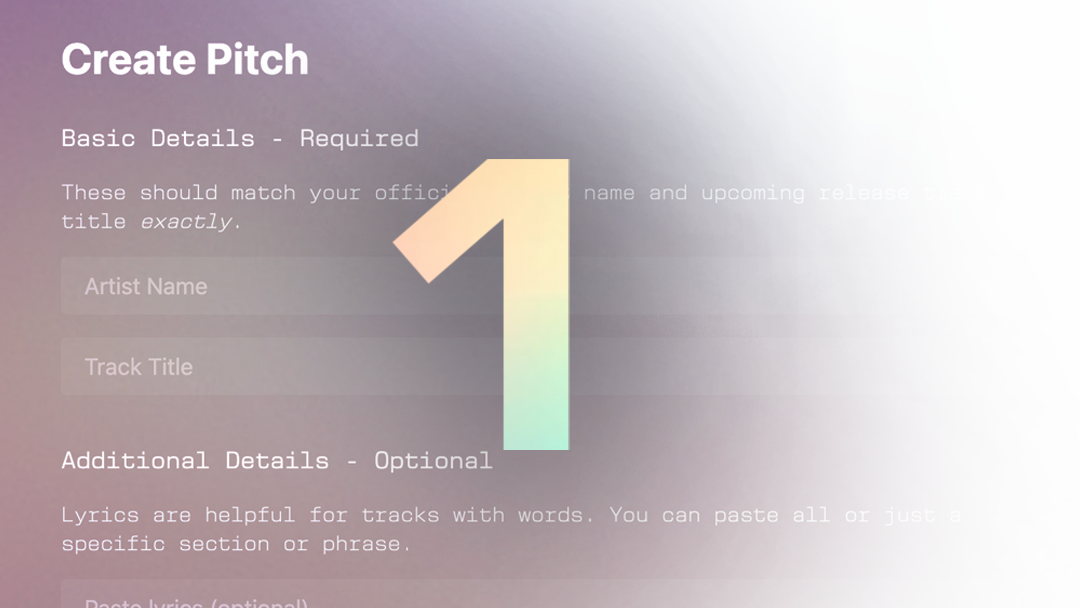
Add New Release
Provide the artist, track name, and lyrics.
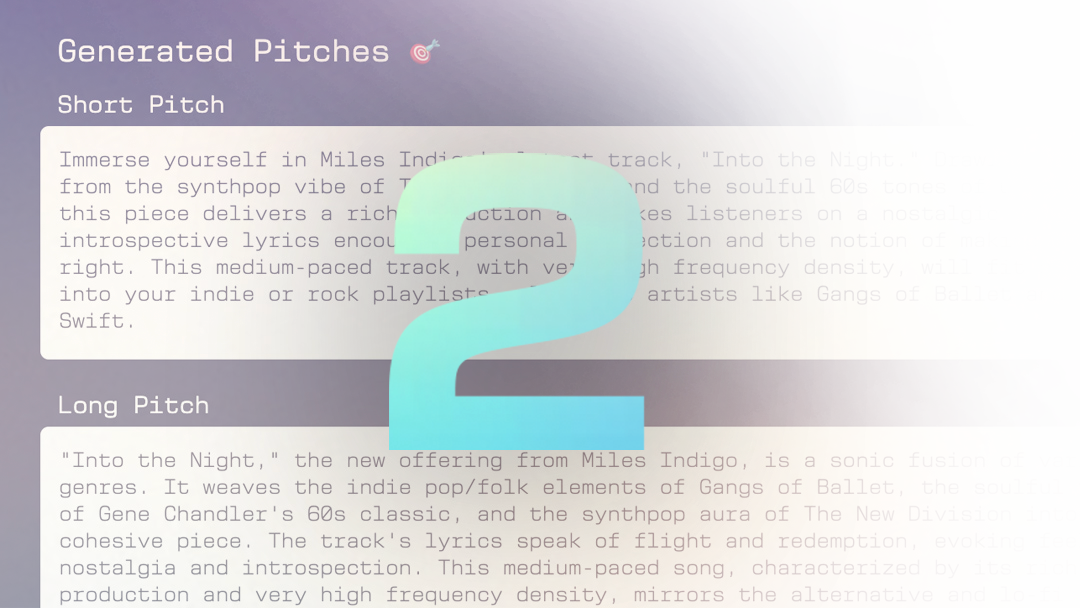
Analysis & Pitch
Get perfectly formatted pitches in minutes.

Win the Algorithm
Improve the performance of your tracks.
Benefits
⏱️ Generate your pitch in under 5 minutes
🔥 2.7X more likely to land playlist placements
⚡️ 146% more plays in algorithmic radio
🎧 Automatic release day inclusion in MusicAtlas
🌎 Consideration for MusicAtlas Playlists
🔎 Increase discovery via our industry tools
Credits start at $9
Each credit gets you 2 pitch recommendations.
Each pitch generation includes a short pitch reco (for Spotify) and a long pitch reco (for Amazon Music).
→ Buy CreditsWhy PitchWriter Works So Well
tl;dr algorithms love algorithms
Need more details? Read on!
DSPs (like Spotify and Amazon Music) use algorithms to analyze new releases and use artist's editorial submissions to enrich their track metadata. They say it's a way to get on editorial playlists, but the truth is that 99% of submissions are never read by editors–there's simply too much new music coming in for them to listen to all of it.
That alignment between your pitch and the DSP’s own analysis is everything. It creates a trust score inside their system. But knowing who your track sounds like is way tougher than it seems. There's over 100 millions tracks out there!
PitchWriter helps you nail the trust score because your artist submission and the DSP's own analysis line up perfectly. The track is confirmed by both you and their analysis for the correct genre and sound, so you dramatically increase your odds of getting reviewed by an actual human editor thus getting placed.
And regardless of if you are placed on a DSP editorial playlist, your track's algorithmic performance will be significantly better over time since the data you provided lines up so well with the DSP's own analysis of the track. Their algorithms know they can trust that your track fits well with the stations and personalized experiences they are programmed to feed to their listeners.
PitchWriter vs Other Pitching Methods
Here’s how PitchWriter compares to general AI tools like ChatGPT, Claude, and Gemini, and the traditional editorial pitch process.
| PitchWriter | General LLMs | Traditional | |
|---|---|---|---|
| Sonic Metadata Accuracy | Driven by track-level listening models ✅ | Text-based guesswork | Human guesswork |
| Suggested Artists & Playlists | Generated from deep listening analysis ✅ | Guesses based on text inference | Manually entered or omitted |
| Time to Submit | 10 mins to final draft ✅ | Fast, but still guesswork | 30–60+ mins to first draft |
| Likelihood of DSP Match Trust | High (data-aligned) ✅ | Low (not audio-grounded) | Low (subjective) |
| Pitch Format | Optimized for Spotify & Amazon ✅ | User dependent | Inconsistent |
| Result | 2.7× more likely to land ✅ | Convincing, but ungrounded | Often overlooked |
Try it for free
PitchWriter runs on the same sonic analysis and matching engine that powers the MusicAtlas GPT. You can test prompts to generate similar pitches using already released tracks (including your own).
Sample prompt:
→ "Write me an editorial pitch under 500 characters for Yellow by Coldplay, using MusicAtlas similar tracks and description as reference points. Include playlist placement recos if appropriate."
PitchWriter unlocks the power of LLMs and advanced multi-model machine-learning to benefit all artists making real music.
→ Demo PitchWriter with MusicAtlas GPT